
No one would show up to a marathon untrained and fasted and expect to perform at their best. Yet, for decades, that is exactly how patients have prepared themselves for the medical equivalent of a 26-mile race—major surgery. Eric Zimmerman, co-founder and CEO of Enhanced Medical Nutrition (EMN), is changing that. Drawing on his background in kinesiology and as an athlete, Zimmerman is shifting the focus from simply surviving the procedure to actively fueling the body’s ability to heal.
Cutting his teeth in the hospital basements
Zimmerman didn’t set out to be a founder. After graduating with a degree in kinesiology and applied health from the University of Winnipeg, where he played varsity basketball, he found a role at a medical device company supporting orthopedic surgeons. The role gave Zimmerman a front row seat to surgeries, including specialties like trauma surgery, and hip and knee replacements.
“That’s where I cut my teeth, working with surgeons and hospital staff, spending a lot of time in the basements of the hospital where medical device processing happens or in operating rooms, learning the ins and outs of how industry works with hospitals,” he says.
The company he worked for also happened to have an innovation portfolio, which allowed Zimmerman to attend conferences and research upcoming trends and innovations in surgical care.
“It could be anything from synthetic cartilage to virtual reality education to train surgeons better. It was a surgeon mentor who pointed me to one of these conferences where I first learned about the concept of medical nutrition,” Zimmerman says.
Medical nutrition applies what we know in sports science to clinical populations. It’s a shift away from the traditional approach that leaves patients unprepared and depleted before they even reach the operating table. Instead, medical nutrition uses targeted metabolic “hacks” like specific protein, amino acid, and carbohydrate supplementation to protect muscle mass and prime the immune system. It’s the difference between asking a body to survive a trauma that’s caused by surgery and giving it the specialized tools it needs to actively repair itself.
“When people are going through major surgery, historically, surgeons are only focused on the surgery itself. They don’t necessarily consider all the things that are happening before and after the procedure,” he says. “That was the light bulb moment for me.”
Trading the corporate ladder for the startup leap
As an athlete, Zimmerman knew how targeted nutrition could accelerate performance, strength and recovery. But in the hospital, he saw the opposite: the devastating speed at which muscle “falls off the bone” when a patient is acutely ill, immobilized, or undergoes surgery.
Seeing the disparity put Zimmerman at a crossroads in his career. He had to decide whether to continue climbing the corporate ladder in the medical device industry or take a chance on something new and virtually unknown.
“I had fallen in love with the idea, had personal connections to it and was going back and forth about what to do,” he says. “Luckily, one of my bosses at the time was also a mentor. He encouraged me to go out on a limb and to do it. He basically said, ‘Just go for it. Take the risk. It’s a massive opportunity to make an impact and you won’t regret it.’”
Training for surgery
The core of EMN’s solution is training and building up the body’s metabolism. Just as the marathon runner “carbs-up” to ensure their glycogen stores are full, the company’s lead product, a nutrition program called ENROUTE®, that includes 2 patented formulas to help prevent the body from entering a catabolic state, where it would otherwise break down its own muscle for energy during surgery.
While the science was solid, the path to the patient required a strategic pivot. Originally focused on long-cycle B2B hospital procurement, the pandemic forced EMN to rethink its strategy. They landed on a unique “B2B2C” model: the surgeon acts as the customer or coach, recommending the program to patients as part of their pre-op checklist, while the patient is the end consumer.
“Surgery is a teachable moment. Surgeons walk patients through everything happening behind the scenes—much of which is out of their control. We saw a major opportunity to change that by empowering patients through the surgeon’s recommendation, giving them clear, actionable steps to support their own recovery—whether that’s getting back to the golf course or playing with their grandkids,” Zimmerman explains. “We provide patients with the tools to take ownership and control of their recovery journey.”
Joining the MIX family
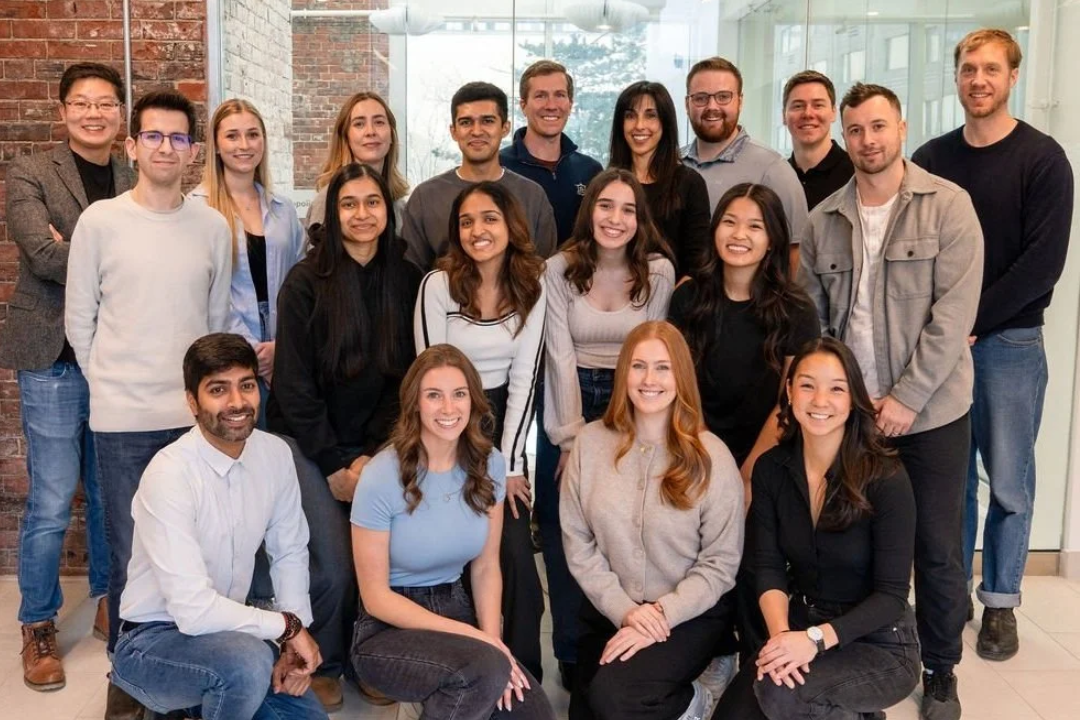
Navigating the intersection of life sciences and food tech can be lonely, which is what drew Zimmerman to the Medical Innovation Xchange (MIX). For a company that Zimmerman jokingly calls an “ugly duckling”, not quite a traditional medical device, but far more clinical and scientifically validated than a standard supplement, finding a community of peers was essential.
“We want to surround ourselves with amazing players, because that’s how you get better,” Zimmerman says, leaning on his basketball roots. Being part of the MIX ecosystem has allowed the EMN team to bypass the typical “red tape” of the industry by tapping into a collective brain trust of founders who have already scaled the mountain.
“There are people down the hall who can answer a critical question or share an experience that moves us forward faster,” he says.
Scaling the standard of care
With a successful Series A under their belt, EMN is now in growth mode. While they have a strong footprint in Canada, the primary focus is the U.S. market, where they have already captured nearly 2% of the orthopedic surgeon market and supported over 40,000 patients.
For Zimmerman, the goal isn’t just sales; it’s a fundamental shift in how we view the “patient journey.” He envisions a future where metabolic optimization and training patients for surgery is as standard as the implant used in the operating room.
“In ten years, if you don’t have an optimization strategy for your patients, it will be seen as negligent,” he says. “We’re just scratching the surface of how we can support surgery and empower individuals to have the best outcome possible.”